Epoxy floor installation timeline Amarillo: day-by-day breakdown by system
⏱️ 7 min read · Last updated: 2026
- Total install days: 1 day (polyaspartic coating) to 3 days (multi-coat epoxy systems including cure windows between coats)
- Walk-on cure time: 4–6 hours for polyaspartic; 18–24 hours for standard epoxy
- Vehicle-ready cure time: 24 hours for polyaspartic; 72 hours (3 days) for standard epoxy
- Ideal temperature range for curing: 50°F–90°F; below 50°F slows cure significantly; above 95°F (common in Amarillo summers) can cause polyaspartic to flash-cure too fast, creating bubbles
- Surface prep duration: Typically 2–4 hours for a standard 2-car garage; concrete moisture above 4% on a moisture meter requires additional dry time before any coating is applied
Most contractors tell you epoxy takes “a day or two.” That’s technically true and practically useless. The real epoxy floor installation timeline in Amarillo depends on three things they usually skip: which coating system you’re using, what your concrete looks like before a single drop of product goes down, and what the outdoor temperature will be during the cure window. Get those three wrong and you’re peeling coating off your floor six months from now.
I’ve watched installs go sideways in Amarillo specifically because crews didn’t account for the city’s weather extremes — 100°F July afternoons that make polyaspartic flash-cure in under 20 minutes, and spring humidity spikes that trap moisture under a freshly applied epoxy coat. The timeline isn’t one number. It’s a decision tree, and the branch you’re on depends on what you’re starting with.
The system you choose changes everything about your timeline
Your coating system — not your contractor’s schedule — is the primary driver of how long the job takes. There are three systems that account for nearly every residential install in Amarillo, and their timelines are genuinely different.
| System | Install days | Walk-on cure time | Vehicle-ready | Why others fail here |
|---|---|---|---|---|
| Polyaspartic coating (single-layer) | 1 day | 4–6 hours | 24 hours | Epoxy can’t match this cure speed; DIY kits have no UV stability |
| 100% solids epoxy (base + topcoat) | 2 days | 18–24 hours | 72 hours | Water-based epoxy yellows under UV; single-coat skips needed build thickness |
| Epoxy base + polyaspartic topcoat | 2 days | 6–8 hours after topcoat | 24–48 hours | Skipping the epoxy base gives you durability but less chemical resistance on the surface |
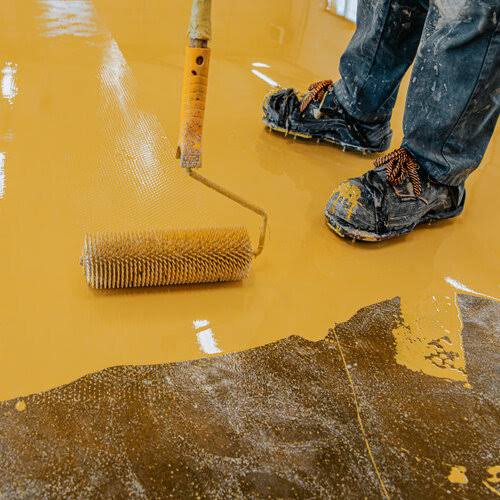
The polyaspartic coating is the fastest option available in 2026 — it cures through a chemical reaction that isn’t heavily slowed by cool temperatures the way water-based products are. The trade-off is a tighter application window: once mixed, you have roughly 20–30 minutes to spread it before it starts to set. That’s a professional-only timeline in most conditions.
The epoxy base plus polyaspartic topcoat hybrid is the system most experienced epoxy floor installers Amarillo TX recommend for garages that see daily vehicle traffic, because you get the adhesion and fill depth of epoxy with the UV stability and abrasion resistance of a polyaspartic topcoat.
Quick check: If you need your garage back within 24 hours, polyaspartic-only is your only realistic option. If you can give it 48–72 hours, the hybrid system gives you a more durable long-term result.

Surface prep duration: the step that actually controls your schedule
Surface prep duration is the most commonly underestimated part of the epoxy floor installation timeline in Amarillo — and it’s the variable that blows up more installs than any curing issue. A standard two-car garage (roughly 400–500 sq ft) takes 2–4 hours of mechanical preparation before a drop of coating goes down.
Professional installers use diamond grinding or shot blasting to open the concrete’s pores so the coating bonds mechanically, not just chemically. Diamond grinding is the current standard; shot blasting is faster on very large commercial slabs but less common for residential work. Acid etching — the method most DIY kits still recommend — is less effective on the dense, hard concrete common in Amarillo’s climate.
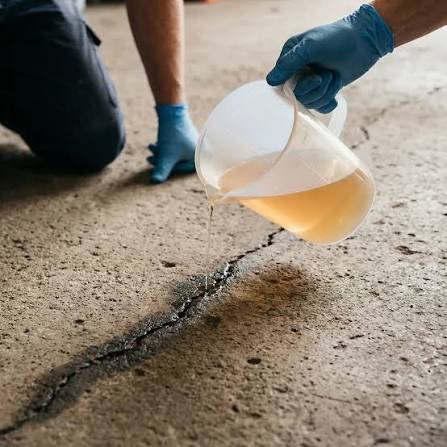
If the concrete has existing cracks, oil stains, or previous coatings, add another 1–3 hours for repair and stain treatment. Oil stains in particular require degreasing and sometimes two cycles of treatment before the concrete will accept a coating uniformly. Previous paint or sealers often need to be mechanically removed entirely.
The surface prep stage also determines whether your job stays on a single-day schedule. If the contractor arrives, tests the concrete moisture, and finds it’s above threshold, the job gets pushed. That’s not a failure — that’s the correct call. Coating over wet concrete is one of the leading causes of early epoxy failure.
Surface prep typically adds 2–4 hours to any epoxy job in Amarillo — and skipping it properly is the single fastest way to shorten your floor’s lifespan from 10+ years to under 2.
Quick check: Ask your installer specifically what prep method they use and whether they test concrete moisture on arrival. If the answer is “we acid etch” or “we don’t test moisture,” that’s a red flag worth investigating before you sign anything.
Can epoxy floors be installed in one day in Amarillo?
Yes — but only with a polyaspartic coating system and concrete that passes a moisture test on arrival. A true single day install means the crew grinds the concrete in the morning, applies the coating midday, and you’re walking on it by late afternoon. That’s achievable, and it happens regularly in Amarillo.
The conditions that make it work:
- Concrete moisture below 4%
- No existing coatings or sealers to remove
- Outdoor temperature between 50°F and 85°F during application (avoiding the peak heat window of an Amarillo summer afternoon)
- No significant cracks requiring epoxy fill and dry time before top-coating
The conditions that break it:
- Temperature above 90°F — polyaspartic cure time accelerates dramatically, and you can end up with lap marks or a rough surface texture if the installer can’t keep pace
- Concrete that was sealed at any point in the last five years — removal adds a day
- Active moisture vapor transmission through the slab — this needs a vapor barrier primer that adds a cure window of its own
One-day polyaspartic installs in Amarillo typically cost more than multi-day epoxy jobs — partly because of the faster-curing product cost and partly because experienced crews who can apply polyaspartic correctly in Amarillo’s weather tend to charge accordingly. If you want to understand the full pricing picture, the epoxy flooring cost Amarillo TX breakdown is worth reviewing before you get quotes.
Quick check: If your garage has never been coated, was poured in the last 10 years, and you’re scheduling in March, April, or October — you’re a strong candidate for a single day install.
Walk-on vs. vehicle-ready: the cure time stages explained
Cure time is not a single moment — it’s a progression, and each stage unlocks a different type of use. Confusing walk-on cure time with vehicle-ready epoxy cure time is how people scratch or crack a floor they just paid good money for.
Here’s how the stages work for the two most common systems:
Polyaspartic coating cure stages
- Tack-free (2–3 hours after application): Surface is dry to the touch but not ready for foot traffic — walking on it now leaves impressions
- Walk-on cure time (4–6 hours): Light foot traffic in soft-soled shoes is safe; no dragging furniture, no dropped tools
- Light use (12 hours): Normal foot traffic, bicycles rolled in; still no vehicle weight
- Vehicle-ready (24 hours): A standard passenger vehicle can park on it without risk of surface compression or delamination
- Full cure (5–7 days): Maximum chemical resistance achieved; safe for heavy vehicles, floor jack use, and chemical spills
Standard 100% solids epoxy cure stages
- Tack-free (8–10 hours): Surface skin has formed but is fragile
- Walk-on cure time (18–24 hours): Foot traffic safe in clean shoes; no abrasion
- Light use (48 hours): Furniture can be moved back in; no sharp metal contact with the floor
- Vehicle-ready (72 hours / 3 days): Passenger vehicle weight is safe
- Full cure (7 days): Chemical resistance, heavy load capacity, and full hardness reached
The full cure milestone matters for one reason most homeowners don’t think about: floor jacks. A hydraulic jack concentrated on a single wheel point can exceed the load rating of a partially cured coating, leaving a permanent impression. Wait the full 5–7 days before doing any vehicle maintenance on the floor.
Quick check: If you’re parking a daily driver, 72 hours for standard epoxy and 24 hours for polyaspartic are your minimum safe thresholds. If you’re parking a truck, SUV, or anything above 5,000 lbs, extend both by 24 additional hours.
How Amarillo’s temperature and humidity shift your timeline
Amarillo sits at 3,600 feet elevation and swings between 100°F summers and sub-zero wind chills in January — and both extremes affect epoxy cure time in ways that most national coating guides simply don’t address. This is where the epoxy floor installation timeline in Amarillo genuinely differs from a job in Houston or Dallas.
Heat (May through September)
Above 90°F, polyaspartic coatings cure faster than most crews can work. The practical result is streaking, lap marks, and uneven texture — not a failure of the product, but a failure of timing. Professional crews in Amarillo’s summer months start at 6–7 AM to apply product before the slab heats up. A concrete slab in direct sun can reach 10–15°F above air temperature, which further accelerates cure.
Standard epoxy actually becomes more manageable in heat — the warmer the slab (within the 50°F–90°F window), the faster it cures and the better it levels. The risk above 90°F is outgassing: trapped air bubbles rising through the coating as the slab heats after application, leaving a pitted surface.
Cold (November through February)
Below 50°F, standard epoxy cure time extends significantly — a 24-hour walk-on window can stretch to 36–48 hours. Below 40°F, some water-based epoxy products won’t cure properly at all and should not be applied. Polyaspartic coatings are more cold-tolerant, with some formulations rated down to 30°F, though cure time still lengthens noticeably below 50°F.
Humidity and spring moisture
Amarillo’s springs bring moisture from the Gulf, and concrete slabs absorb it through a process called vapor transmission. A slab that passes a moisture test in October may fail the same test in April. This is worth scheduling around — or at minimum, testing for on the morning of the install rather than relying on a test done days earlier during the estimate visit.
Quick check: If you’re scheduling in June, July, or August, ask your installer specifically about their summer application protocol. If they don’t mention start time or slab temperature, push for detail.
How many days does an epoxy garage floor take to install?
For a standard two-car garage in Amarillo, the realistic install timeline runs 1–3 days depending on system and concrete condition — with an additional 1–7 days of cure time before the floor reaches full hardness. Here’s the most common scenario broken down by day:
Single day install (polyaspartic only, ideal conditions)
- 7:00 AM — Concrete assessment: Moisture test, crack inspection, existing coating check
- 7:30 AM — Diamond grinding: Mechanical surface prep across the full floor (2–3 hours for a 2-car garage)
- 10:30 AM — Crack repair and detail work: Fill cracks with polyurea filler, allow 30-minute set time
- 11:30 AM — Broadcast chips (optional): Apply decorative flake to wet base coat if included in the system
- 12:00 PM — Polyaspartic topcoat: Final coat applied; working time is 20–30 minutes
- 4:00–6:00 PM — Walk-on cure time reached: Floor is safe for foot traffic in soft-soled shoes
- Next day, 12:00 PM — Vehicle-ready: Passenger car can park normally
Two-day install (epoxy base + polyaspartic topcoat)
- Day 1 morning — Surface prep: Diamond grinding, moisture test, crack repair (3–4 hours)
- Day 1 midday — Epoxy base coat: 100% solids epoxy applied; decorative chips broadcast if applicable
- Day 1 evening — Epoxy cure window begins: Floor off-limits; 18–24 hours needed before topcoat
- Day 2 morning — Scrape excess chips: Remove protruding chip material; light surface pass if needed
- Day 2 midday — Polyaspartic topcoat: Applied over cured epoxy base
- Day 2 late afternoon — Walk-on ready: 4–6 hours after topcoat application
- Day 3 midday — Vehicle-ready: 24 hours after polyaspartic topcoat
For spaces like an epoxy basement floor, the timeline follows the same logic but often adds moisture complexity — basements in Amarillo can have higher vapor transmission than garage slabs, particularly in older builds.
A two-car garage epoxy job in Amarillo commonly runs 1–2 days of active installation plus 24–72 hours of cure time before vehicle use — meaning most homeowners plan for 3–4 days total from empty garage to daily driver parked inside.
Quick check: Count backward from when you need the garage back. If you need the car inside by Saturday afternoon, a polyaspartic install on Friday morning works. A standard epoxy install on Thursday afternoon works. Starting standard epoxy on Friday will leave you waiting until Monday morning.
When the normal timeline breaks down
These are the situations where the standard 1–3 day answer is wrong — and where getting the adjusted timeline right matters most.
Previous paint or latex sealer on the concrete
What changes: Grinding through an existing coating adds 1–3 hours and sometimes requires a second grinding pass. If the old coating is a thick epoxy or paint that loaded up the grinding heads, the crew may need to switch equipment or add a chemical stripper step.
What to do instead: Schedule a pre-install assessment specifically to test adhesion of existing coating and estimate removal time. Don’t book a single day install until you know what’s under your current floor.
Oil stains from decades of vehicle use
What changes: Oil-contaminated concrete won’t bond with epoxy or polyaspartic at the contaminated spots — you get fisheye bubbles or delamination right where the stain was. Treatment requires a degreaser application, scrub, rinse, and dry cycle before grinding. Add 2–4 hours minimum.
What to do instead: Identify and pre-treat oil spots at least 24 hours before the install date so they’re ready when the crew arrives.
Concrete poured less than 28 days ago
What changes: Fresh concrete hasn’t completed its initial curing process. Concrete reaches roughly 70% of its design strength at 28 days — applying a coating before that point traps moisture and often causes early failure.
What to do instead: Wait the full 28 days. Moisture test twice before scheduling the install — once at 21 days and once on the install morning.
Temperature drop forecast overnight during cure
What changes: If you apply standard epoxy at 5 PM and the temperature drops below 50°F by midnight, the cure slows dramatically. Your 24-hour walk-on window can extend to 36–48 hours.
What to do instead: Check the overnight low, not just the daytime high. If it’s dropping below 55°F, ask your installer about a polyaspartic topcoat (more cold-tolerant) or reschedule for a warmer forecast window.
Garage with floor drains or expansion joints
What changes: Expansion joints require flexible joint filler — a different product than crack repair epoxy — and the filler needs 1–2 hours of set time before coating. Floor drains require masking and edge work that slows the grinding phase.
What to do instead: Flag these features explicitly when getting quotes. A contractor who doesn’t ask about them upfront may be budgeting for a straightforward job that yours isn’t.
Concrete with active hydrostatic pressure (water pushing up through slab)
What changes: Hydrostatic pressure will push any coating off a concrete slab from below. Standard moisture vapor transmission is manageable with a vapor barrier primer; active hydrostatic pressure is a structural drainage problem that no coating system solves on its own.
What to do instead: A contractor should identify this during the pre-install moisture test. If you see water pooling under the slab after rain or irrigation, address the drainage before scheduling any epoxy flooring Amarillo TX installation.
- Polyaspartic coating is the only system that delivers a true single day install — walk-on in 4–6 hours, vehicle-ready in 24 hours
- Surface prep duration (2–4 hours for a 2-car garage) is the variable most people underestimate — and the one that most directly determines how long the coating lasts
- Amarillo’s summer heat above 90°F narrows the polyaspartic application window to under 30 minutes — early-morning scheduling is essential from May through September
- Standard epoxy needs 72 hours before vehicle weight; parking earlier risks surface compression and delamination that voids most warranties
Common questions about epoxy floor installation timeline Amarillo
What determines how long an epoxy floor installation actually takes?
Three factors drive the timeline: which coating system you choose (polyaspartic = 1 day; standard epoxy = 2–3 days), how much surface prep the concrete requires (typically 2–4 hours), and whether the concrete passes a moisture test on install day. Weather — specifically temperatures above 90°F or below 50°F — is the fourth variable specific to Amarillo that can extend any timeline.
How should I prepare my garage before epoxy installation day?
Remove all vehicles, shelving, and stored items completely. Pre-treat any visible oil stains with a degreaser at least 24 hours before the crew arrives. Mark any cracks or soft spots for the installer. If your garage has a floor drain, note its location. Good prep on your end keeps the crew’s time focused on the concrete, not logistics.
One-day polyaspartic vs. multi-day epoxy — which system is actually faster overall?
Polyaspartic is faster by 48–72 hours total. A single-coat polyaspartic job done Friday morning means you’re parking your car Saturday morning. The same job done with 100% solids epoxy on Friday means waiting until Monday. The speed
See also: epoxy flooring Amarillo TX
See also: epoxy basement floor Amarillo
See also: epoxy floor installers Amarillo TX
Related: epoxy floor maintenance cleaning
Related: is epoxy flooring worth it Amarillo
Related: commercial epoxy flooring Amarillo TX