“`html
Epoxy garage floor Amarillo heat: what actually holds up
⏱️ 7 min read · Last updated: 2026
- Amarillo garage slab temperatures commonly reach 140°F–160°F in July and August, with ambient garage air often hitting 120°F–130°F on peak days.
- Standard epoxy resin has a heat tolerance rating of approximately 120°F–140°F under sustained load — right at the edge of Panhandle summer conditions.
- Hot tire pickup occurs when tire contact temperatures exceed roughly 150°F–160°F, softening standard epoxy and pulling it from the slab surface on the drive.
- Polyaspartic coating carries a sustained heat tolerance commonly rated at 200°F–250°F, well above what Texas Panhandle summers can deliver to a concrete slab.
- UV stable floor coatings using aliphatic chemistry retain color with minimal yellowing; standard aromatic epoxy resin can visibly yellow within one to two summers of direct sun exposure in high-UV regions like Amarillo.
If you’re researching epoxy garage floor Amarillo heat performance, the short answer is that most standard epoxy systems are not built for what a Texas Panhandle summer actually delivers. Garage slabs here routinely hit 140°F–160°F, tires arrive from 150°F asphalt, and UV index values reach 10 or 11 for weeks at a time. Knowing which coating chemistry survives those conditions — and which one fails within two summers — is the difference between a floor that lasts a decade and one you’re redoing every few years. This article explains the failure mechanisms in plain terms, compares epoxy resin to polyaspartic coating across every relevant criterion, and gives you a clear recommendation for the most common Amarillo garage scenarios.
The temperature reality your floor faces every summer
Amarillo garage slabs in July and August commonly reach 140°F–160°F on the surface — a figure that surprises most homeowners focused on outdoor air temperature rather than radiant concrete. An uninsulated south- or west-facing garage door makes this significantly worse. The slab stores heat all day and releases it slowly into the evening, so the floor never fully cools between peak periods.
Beyond peak heat, the annual temperature swing in the Texas Panhandle creates a second problem that most coatings aren’t engineered for. Amarillo winters drop into single-digit Fahrenheit temperatures, while summer peaks push past 105°F outdoors and even higher inside an enclosed garage. That’s a swing of 100°F or more across the year — and repeated expansion and contraction is one of the primary forces that delaminate coatings over time. Standard epoxy resin, with its approximate sustained heat tolerance of 120°F–140°F, is already operating at its limit before a warm car pulls into the space.
In the Texas Panhandle, a garage slab in direct summer sun commonly exceeds the rated heat tolerance of standard epoxy resin by 20°F–40°F — not occasionally, but on a routine basis from June through September.
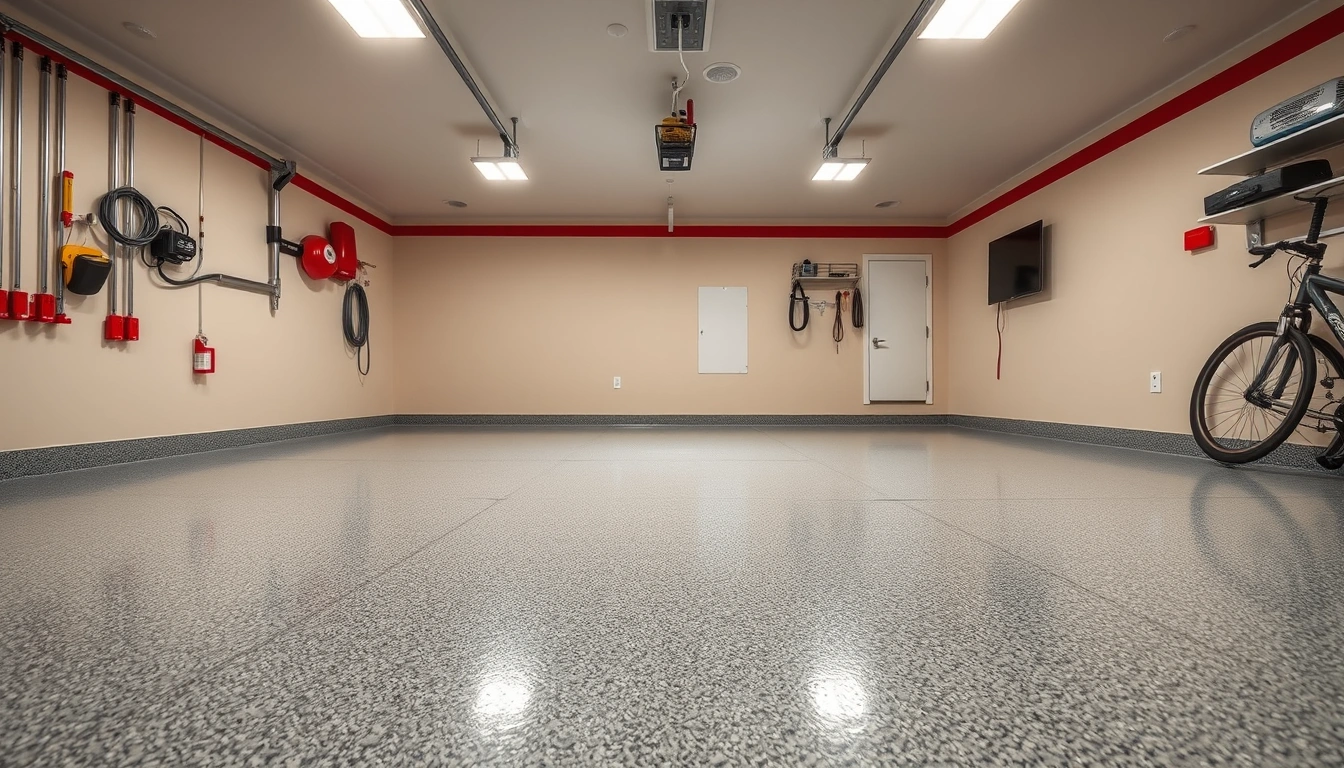
What hot tire pickup actually does to epoxy resin
Once you understand how hot the slab gets, the next failure mode becomes obvious: hot tire pickup. This is the most common way epoxy floors fail in hot climates, and it’s almost never mentioned in product marketing. When you drive home after a summer errand, your tires have been rolling on asphalt sitting at 150°F–180°F. The tire surface absorbs that heat. You park, the hot rubber contacts the floor coating, and the localized heat softens the epoxy directly under the contact patch.
As the tire cools overnight, it bonds lightly to the softened coating surface. When the car backs out the next morning, that bond lifts the coating — sometimes as small flakes, sometimes in larger sections. The hot tire pickup threshold for standard epoxy resin is roughly 150°F–160°F at the point of contact, which is well within what Amarillo summer tires regularly reach. Polyaspartic coating, by contrast, resists hot tire pickup at sustained temperatures commonly above 200°F — which is why professional installers in high-heat markets have shifted toward polyaspartic systems over the past decade. The product difference isn’t about quality; it’s about chemistry matched to climate.
Does Amarillo heat cause epoxy garage floors to peel?
Yes — and the peeling follows a predictable pattern. Epoxy garage floor Amarillo heat conditions cause failure through two compounding forces: thermal softening at the bond interface and adhesion failure from concrete moisture migration. When surface temperatures push past 140°F, standard epoxy loses rigidity where it bonds to the concrete. At the same time, heat drives moisture vapor upward through the slab, and that vapor pressure pushes against the coating from below.
The result starts as small bubbles, progresses to delamination at the bubble edges, and eventually lifts into peeling sections. Homeowners usually blame the installer or the product brand, but the real cause is a mismatch between coating chemistry and local climate. A floor installed correctly using the wrong product for Texas Panhandle conditions will still fail — typically within two to three summers.
Proper moisture vapor testing before installation is critical in Amarillo for this reason. The acceptable moisture vapor emission rate (MVER) for most epoxy systems is under 3 lbs per 1,000 square feet per 24 hours. Panhandle slabs can exceed this after rain events or irrigation, and a coating applied over high-vapor concrete will fail regardless of how good its heat tolerance is. For more on diagnosing existing slab problems before coating, see our guide to epoxy floor over old concrete cracks.
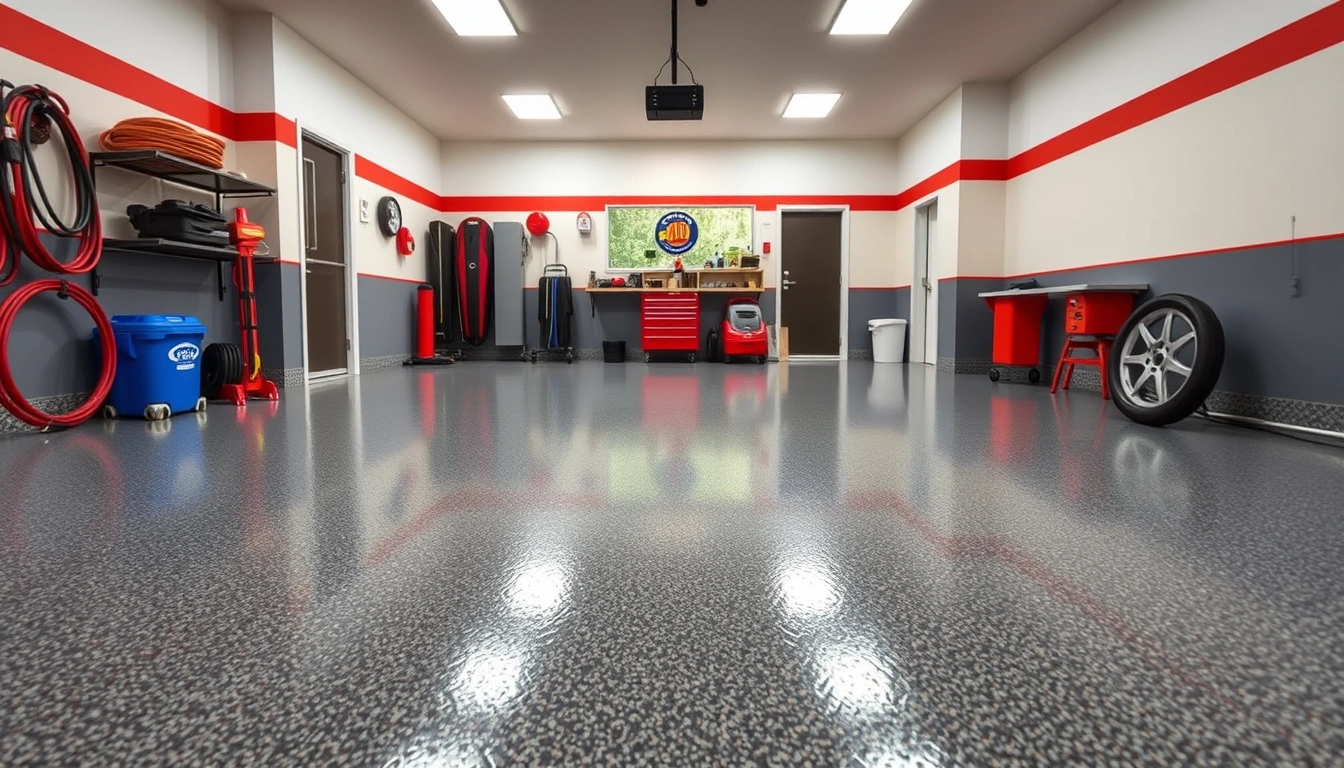
Will my epoxy floor yellow from Amarillo sun exposure?
Peeling and bubbling are structural failures — but UV yellowing is a parallel problem that affects appearance and long-term durability at the same time. Standard aromatic epoxy resin will yellow from UV exposure, and in Amarillo, with roughly 263 sunny days per year and UV index readings that commonly reach 10 or 11 in summer, visible yellowing can appear within one to two seasons. This isn’t a brand defect; it’s a chemistry issue. Aromatic epoxy contains molecular bonds that degrade and discolor when struck by ultraviolet radiation.
Aliphatic polyurethane or polyaspartic topcoats are UV stable floor coating options engineered without those UV-sensitive bonds. If your garage receives direct sunlight through windows or a frequently open door, a UV stable topcoat isn’t a luxury upgrade — it’s the only version that will look the same in five years as it does on installation day. One scenario that accelerates yellowing faster than most: garages with south-facing glass panels in the door, where UV light hits the floor for several hours daily at high intensity. Under those conditions, a standard epoxy floor can show noticeable amber discoloration within a single summer, while a polyaspartic topcoat under identical exposure shows minimal change.
UV yellowing in aromatic epoxy resin isn’t just cosmetic — once yellowed epoxy oxidizes, it also becomes brittle, which accelerates chipping and surface delamination in high-traffic zones.
Should I choose polyaspartic over epoxy for a hot Texas garage?
Given what heat and UV do to standard epoxy resin, the question becomes whether polyaspartic coating is worth the upgrade. For most Texas Panhandle garages, it is — specifically because of its superior polyaspartic heat resistance, hot tire pickup tolerance, and UV stable aliphatic chemistry. This isn’t a marginal difference in performance; it’s a gap that becomes more visible with each passing summer.
Polyaspartic systems also cure faster than epoxy resin, often returning to light foot traffic in as little as one hour versus 24 hours for standard epoxy, and to full vehicle traffic in 24 hours versus 72 hours. In a working garage where downtime is a real cost, that matters. The tradeoff is application skill: polyaspartic cures so quickly that it demands experienced installers. DIY application in hot Amarillo conditions is genuinely difficult and more likely to produce lap marks and surface inconsistencies than a clean, even finish.
Cost is a real factor too. Polyaspartic coating runs roughly $5–$9 per square foot installed versus $3–$6 for standard epoxy. For a typical two-car garage of 400–500 square feet, that’s a difference of $800–$1,500. Whether that premium makes sense depends on how long you plan to stay in the home and how much direct sun the floor receives. For a detailed breakdown of what drives local pricing, the epoxy flooring cost Amarillo TX guide covers the variables specific to this area.
The honest side-by-side: epoxy vs. polyaspartic for Panhandle conditions
With the individual failure modes covered, it’s useful to see how the two systems stack up across every criterion that matters for an Amarillo garage in a single view.
| Criteria | Standard epoxy resin | Polyaspartic coating | Winner for Amarillo |
|---|---|---|---|
| Sustained heat tolerance | ~120°F–140°F | ~200°F–250°F | Polyaspartic |
| Hot tire pickup resistance | Fails above ~150°F contact temp | Resists above 200°F contact temp | Polyaspartic |
| UV yellowing resistance | Yellows within 1–2 summers | Minimal yellowing (aliphatic chemistry) | Polyaspartic |
| Cure time (return to vehicle traffic) | ~72 hours | ~24 hours | Polyaspartic |
| DIY-friendliness | Moderate — more working time | Difficult — fast cure demands skill | Epoxy |
| Installed cost (per sq ft) | $3–$6 | $5–$9 | Epoxy (on budget) |
| Temperature swing durability | Moderate — expansion stress over time | Flexible — better handles 100°F+ swings | Polyaspartic |
| Longevity in unconditioned TX garage | Commonly 3–5 years before recoat | Commonly 10–15 years with maintenance | Polyaspartic |
| Chemical resistance (oil, gas) | Good | Excellent | Polyaspartic |
The table shows that polyaspartic coating wins on almost every criterion that matters for epoxy garage floor Amarillo heat conditions. Epoxy holds its own on upfront cost and DIY accessibility — but those advantages apply only at installation. Polyaspartic’s heat resistance, UV stability, and longer service life compound in value every year the floor is in service, making it more cost-effective for most homeowners over a five-year or longer horizon.
When standard epoxy still makes sense in Amarillo
Despite polyaspartic’s performance edge, standard epoxy resin isn’t the wrong choice for every Amarillo garage — it’s the wrong choice specifically for unconditioned spaces in direct sun. If your garage is climate-controlled and stays below 85°F even in summer, epoxy resin performs well and saves you meaningful money on installation.
Epoxy is also the right call for interior spaces that aren’t technically garages — workshops, utility rooms, or basement floors where temperature extremes are moderated. If you’re researching epoxy basement floor Amarillo options, standard epoxy resin is far more appropriate there than in a sun-exposed garage, because basement temperatures in the Panhandle stay relatively stable year-round. The heat and UV stresses that kill epoxy in an open garage simply don’t exist below grade.
Three specific situations where epoxy still wins in Amarillo:
- The garage is fully insulated and air-conditioned, keeping slab temperatures below 100°F in summer.
- Budget is the primary constraint and recoating every four to five years is acceptable.
- The floor will be covered by anti-fatigue mats, tool storage, or a lift system that shields most of the surface from direct heat and UV exposure.
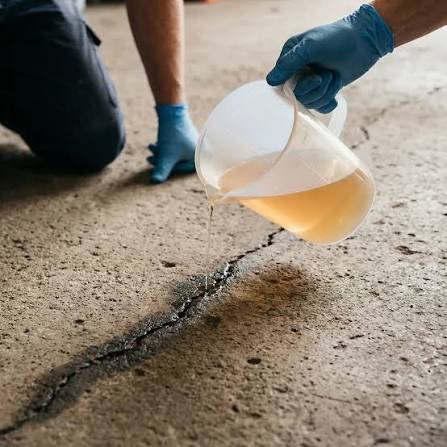
One more consideration before choosing any coating: if the concrete has existing cracks or surface damage, those need to be addressed first. Coating over compromised concrete shortens the life of even the best system. A proper evaluation of epoxy floor over old concrete cracks is worth scheduling before you select a product — the prep work often determines longevity more than the coating chemistry itself. You can also compare installation approaches in our full epoxy flooring Amarillo TX overview before requesting quotes.
The verdict: which system to pick and why
Pulling everything together, the decision comes down to one question: is your Amarillo garage exposed to summer heat and sun, or is it protected from them?
Choose polyaspartic coating if your garage is unconditioned, south- or west-facing, receives direct sunlight, or if you park vehicles in it regularly. This covers the majority of residential garages in the Texas Panhandle — which means polyaspartic is the default recommendation, not a premium exception.
Choose standard epoxy resin if the garage is climate-controlled, primarily used for storage rather than vehicle parking, or if a lower upfront cost is the deciding factor and you’re prepared to recoat on a shorter cycle. Epoxy still works in the right context; it just requires realistic expectations about lifespan under Panhandle conditions.
Choose neither — and consult a specialist first — if the concrete slab has significant cracking, active moisture infiltration, or shows signs of previous coating failure. No coating chemistry solves a substrate problem. Getting a professional assessment before purchasing materials is the step most homeowners skip and most regret. Start with the epoxy flooring Amarillo TX page to connect with a local installer who can evaluate your specific slab before you commit to a system.
The most expensive floor coating decision in Amarillo isn’t choosing polyaspartic over epoxy — it’s installing the right product on unprepared or moisture-compromised concrete and redoing the job in three years.
- Amarillo garage slabs commonly reach 140°F–160°F in summer — exceeding standard epoxy resin’s heat tolerance of 120°F–140°F on a routine basis.
- Hot tire pickup is the primary failure mode for epoxy floors in the Texas Panhandle; polyaspartic coating resists it at temperatures above 200°F.
- Standard aromatic epoxy resin yellows within one to two summers under Amarillo’s high-UV conditions; aliphatic polyaspartic topcoats do not.
- A hybrid system (epoxy base + polyaspartic topcoat) is a cost-effective middle option worth asking your installer about before committing to either pure system.
Common questions about epoxy garage floor Amarillo heat
{“@context”: “https://schema.org”, “@graph”: [{“@type”: “Organization”, “name”: “AmarilloEpoxyTX.com”, “url”: “https://AmarilloEpoxyTX.com”, “knowsAbout”: “Epoxy Flooring in Amarillo TX: Costs, Systems & Local Installation Guide”}, {“@type”: “Article”, “headline”: “Epoxy garage floor Amarillo heat”, “description”: “”, “datePublished”: “2026-07-11T00:40:17.435411”, “dateModified”: “2026-07-11T00:40:17.435411”, “mainEntityOfPage”: {“@type”: “WebPage”, “@id”: “https://AmarilloEpoxyTX.com”}, “author”: {“@type”: “Organization”, “name”: “AmarilloEpoxyTX.com”}, “publisher”: {“@type”: “Organization”, “name”: “AmarilloEpoxyTX.com”, “url”: “https://AmarilloEpoxyTX.com”}}, {“@type”: “BreadcrumbList”, “itemListElement”: [{“@type”: “ListItem”, “position”: 1, “name”: “Home”, “item”: “https://AmarilloEpoxyTX.com”}, {“@type”: “ListItem”, “position”: 2, “name”: “Epoxy Flooring in Amarillo TX: Costs, Systems & Local Installation Guide”}, {“@type”: “ListItem”, “position”: 3, “name”: “Epoxy garage floor Amarillo heat”}]}]}
See also: epoxy flooring Amarillo TX
See also: epoxy flooring cost Amarillo TX
See also: epoxy basement floor Amarillo
Related: epoxy floor installers Amarillo TX
Related: epoxy vs polyaspartic garage floor Texas
Related: epoxy floor moisture problems concrete slab